
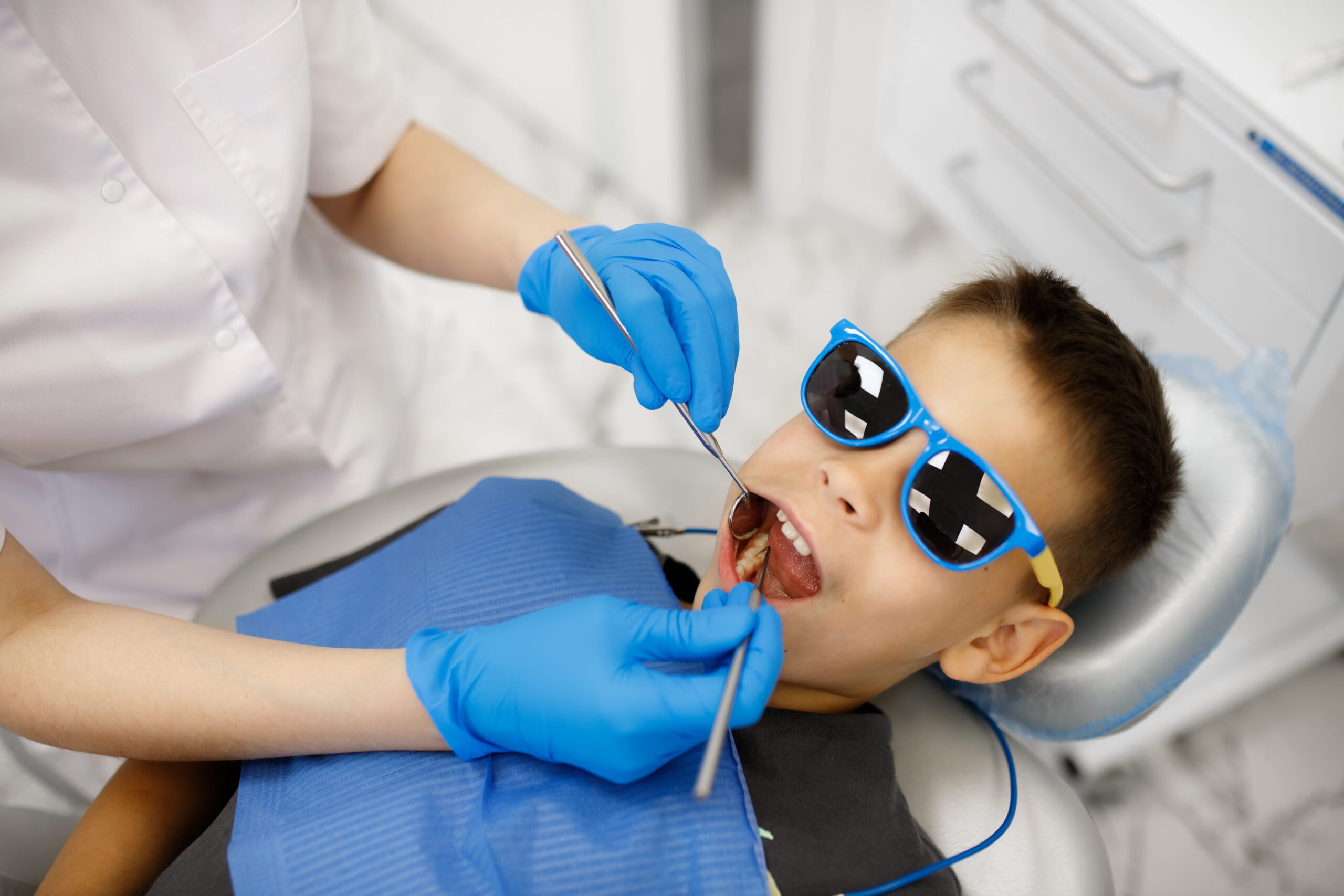
Do Fluoride Treatments and Dental Sealants Actually Work?
They do, and the evidence behind them is unusually clear for preventive dentistry. Sealants stop roughly 81 percent of decay on the chewing surfaces of back teeth in the first two years after placement, and they keep protecting those teeth for years afterward. Fluoride strengthens enamel across the entire mouth and can reverse early damage before it ever becomes a cavity.
Parents at our office sometimes assume these are optional add-ons a practice tacks onto a visit. They are two of the few things in dentistry that prevent a problem outright instead of repairing one after the fact.
This Article Will Address
- How much protection each treatment actually provides
- What separates a mineral application from a resin coating
- How varnish works and how long it keeps working
- The right age to start each one
- Which teeth get sealed and how long sealants last
- Whether fluoride is safe for young children
- Whether tap water and toothpaste are already enough
- What these visits cost and how insurance handles them
How Much Do Fluoride Varnish and Sealants Actually Reduce Cavities?
Sealants prevent about 81 percent of decay on treated back teeth at two years and roughly half of it at four years, with measurable protection lasting as long as nine years. Fluoride varnish works through a different mechanism but just as consistently, rebuilding weakened enamel and slowing the bacteria that drive decay.
Together the two cover both ways children get cavities. Sealants block the deep grooves on molars where a toothbrush bristle physically cannot reach, and fluoride hardens every other surface in the mouth. Roughly nine out of ten cavities in permanent teeth start on those chewing surfaces, which is why sealing them changes the arithmetic so dramatically.
What Is the Difference Between a Fluoride Treatment and a Dental Sealant?
One is a mineral coating painted on every tooth, and the other is a thin resin that fills the grooves of specific back teeth. Fluoride strengthens enamel chemically. A sealant blocks food and bacteria physically.
- Fluoride goes on all teeth, takes about a minute, and is repeated at checkups
- Sealants go on molars only, are placed once, and are checked and repaired as needed
- Fluoride can reverse early enamel damage that has already started
- Sealants prevent decay from starting in grooves that cannot be cleaned
Neither one replaces the other, and neither replaces brushing. We use both because they protect different surfaces in different ways.
How Does Fluoride Varnish Work, and How Long Does Each Application Last?
Varnish is a sticky resin carrying a concentrated dose of fluoride that Dr. Salmon brushes onto the teeth in under a minute. It sets on contact with saliva and keeps releasing fluoride into the enamel for several hours after your child leaves our office.
The mineral it delivers gets built into the tooth surface, producing enamel that is harder and more acid-resistant than what it replaced. Your child can eat almost normally right away, though we ask you to skip crunchy or hot foods and hold off on brushing until that evening so the coating stays where we put it. Most children receive an application at every preventive visit, and our children’s fluoride treatment page explains how we tailor that schedule to individual cavity risk.
At What Age Should My Child Get Their First Fluoride Application or Sealant?
Varnish can start as soon as the first tooth appears, around six months of age, while sealants wait for the permanent molars to erupt at about age six. They begin at different points because they protect different teeth at different stages.
The American Academy of Pediatrics recommends varnish every six months from six months old through age five, with higher-risk children treated every three months. Sealants follow tooth eruption rather than the calendar, so we check at each preventive exam whether a molar has come in far enough to seal. Sealing it within the first months after eruption is when it does the most good. Both fit naturally into the appointments covered by our early dental care services.
Your child is also monitored during recovery until they meet clear discharge criteria, not simply once the procedure itself is finished, and we will not send your child home until they are alert, stable, and ready.
Which Teeth Get Sealed, and How Long Do Sealants Hold Up?
Sealants go on the permanent molars, the first set arriving around age six and the second around age twelve, and they typically last several years before they need repair or replacement.
Application takes only a few minutes per tooth and involves no drilling and no needles. We clean the tooth, apply a bonding solution, brush the material into the grooves, and harden it with a curing light. After that it becomes a routine part of every checkup, where Dr. Salmon inspects each dental sealant for chips or wear and touches up anything that has broken down. Premolars get sealed too when their grooves run deep enough to trap food.
Is Fluoride Safe for Kids, and How Much Is Too Much?
Fluoride is safe at the doses used in a dental office, and the amount in a varnish application is carefully measured and applied by a trained pediatric professional. The risk parents read about, dental fluorosis, comes from swallowing too much fluoride over years while permanent teeth are still forming, not from a coating that sets in seconds and gets brushed off that night.
In practice the swallowing risk sits at home rather than here. A rice-grain smear of toothpaste under age three and a pea-sized amount after that keeps daily exposure where it belongs. If your child takes a fluoride supplement, or your house runs on well water, tell us, because both change the calculation and we will adjust what we recommend.
Do We Still Need These if We Drink Fluoridated Tap Water and Use Fluoride Toothpaste?
Yes, because those sources work at a far lower concentration and they do nothing at all for the grooves in your child’s molars. Tap water and toothpaste supply a steady low dose that genuinely matters, but a professional varnish delivers a concentrated dose that penetrates enamel in a way daily exposure cannot match.
The case for sealing molars is even more clear-cut. No amount of fluoride fills a pit deep enough to trap a bristle, and no toothbrush reaches the bottom of one. Families who do everything right at home still see cavities on chewing surfaces, and that is precisely the gap a resin coating closes.
What Do These Treatments Cost, and Does Insurance Cover Them?
Most dental plans cover both as preventive care, frequently at 100 percent for children, because insurers know prevention costs a fraction of a filling. Paid out of pocket, a varnish application runs a small share of what restoring a decayed molar would.
Plans differ on frequency limits and on the age range for sealant benefits, so our team verifies your coverage before the appointment and tells you exactly what to expect. You can review our preventive and restorative options together on the pediatric dental services page.
Book Your Child’s Sealant and Fluoride Varnish Visit Today
We are open and welcoming new families from Cincinnati, OH and the neighboring communities. If your child has a six-year molar coming in, or it has simply been a while since the last varnish, Dr. Katherine Salmon and the team at Queen City Pediatric Dentistry can handle both in a single appointment. Call 513-993-3803 or book a visit to get on the schedule.
Sources

Are You Looking For Quality Dental
Care For Your Child?
Schedule An Appointment With Our
Talented Team At Queen City Pediatric
Dentistry.